
When it is time to replace your HVAC system, most Tennessee homeowners face the same question: do you go with a proven high-efficiency system that fits your budget today, or do you invest in geothermal and let it pay off for decades? Both are legitimate paths. Both deliver meaningful upgrades over an aging standard system. The right answer depends entirely on your property, your timeline, and your priorities.
Geothermal HVAC in Tennessee is no longer a niche technology but a fully mature, field-proven option with significant financial incentives in 2026. But it is not the right fit for every home or every budget. Here is an honest, side-by-side look at both options so you can make the call with confidence.
The Bottom Line on Geothermal vs. High-Efficiency Before You Dig In
- Geothermal HVAC has higher upfront costs but dramatically lower operating costs over its lifespan.
- High-efficiency systems cost less to install and still deliver significant energy savings over older equipment.
- A 30% federal tax credit makes geothermal significantly more accessible in 2026 than most homeowners realize.
- Not every Tennessee property qualifies for geothermal — a site assessment is the essential first step.
- Both options are a major upgrade over a standard aging system; the question is which one fits your situation.
How Does Geothermal HVAC Actually Work?
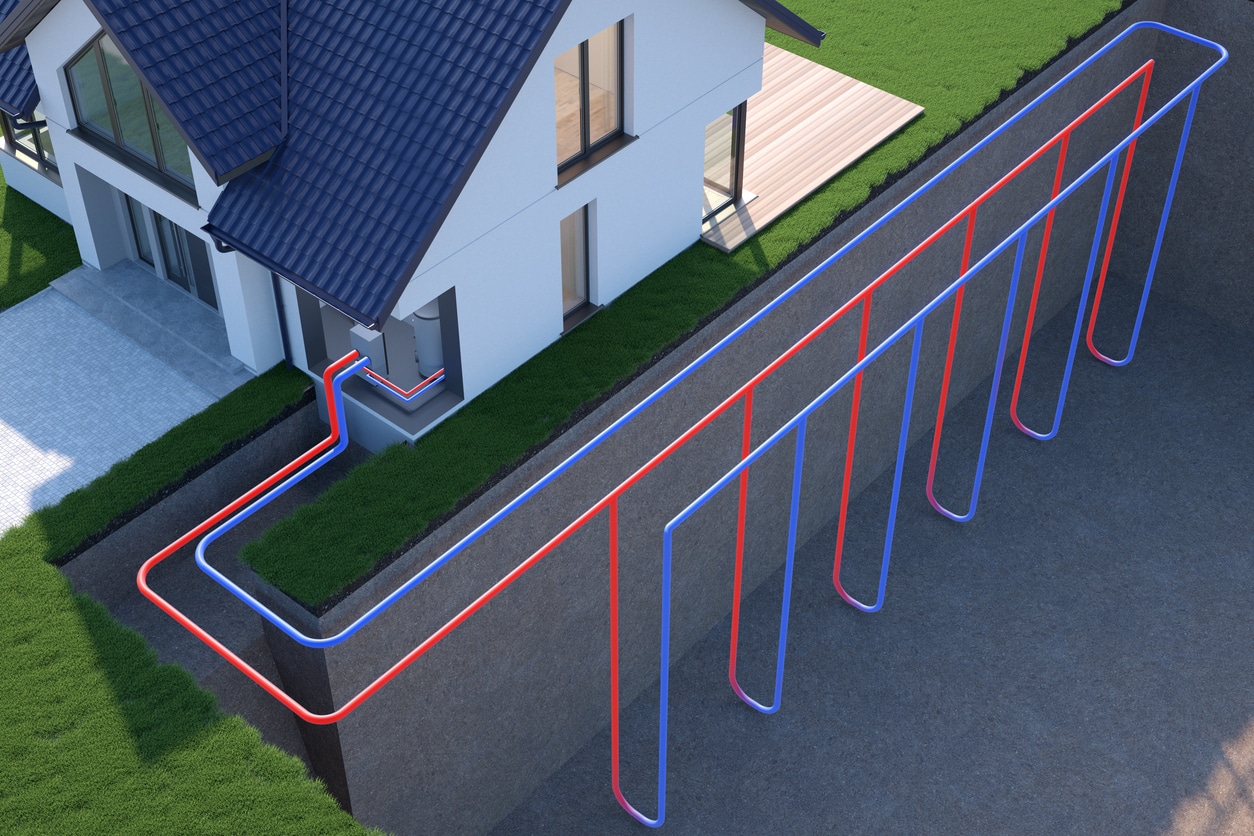
Most people have a rough idea that geothermal involves the ground somehow. Here is the plain-language version. A geothermal heat pump system uses a series of pipes buried in the ground called a ground loop. Fluid circulates through those pipes, absorbing the earth’s stable underground temperature, typically around 55 to 60 degrees Fahrenheit year-round in Tennessee, and bringing that thermal energy into your home.
In summer, the process runs in reverse, pulling heat out of your home and depositing it into the cooler ground. In winter, it extracts heat from the ground and moves it inside. Because the system moves heat rather than generates it, it operates at efficiencies no air-source system can match. According to the U.S. Department of Energy, geothermal heat pumps can reduce energy use by 25 to 50% compared to conventional systems.
C&M’s geothermal HVAC services cover the full installation process from site assessment through system startup.
What Is a High-Efficiency HVAC System?
A high-efficiency system is not just a newer version of what you already have. Modern high-efficiency units use variable-speed compressors, two-stage operation, and advanced heat exchanger designs to deliver significantly more output per unit of energy than the equipment most Tennessee homes currently run.
The federal minimum SEER2 rating for new installations in the Southeast is 15. A high-efficiency system runs at 17 to 20+ SEER2, which translates to real monthly savings on every utility bill. For most homeowners replacing a 10 to 15-year-old system, the jump in efficiency alone is substantial, and the installation process is straightforward with no site requirements. C&M’s AC installation and heating installation services cover high-efficiency system upgrades across Middle Tennessee.
Geothermal vs. High Efficiency HVAC: The Head-to-Head
Upfront Cost
This is where the conversation usually starts. A high-efficiency central system in Middle Tennessee typically runs $4,000 to $8,000 installed, depending on size and equipment. A geothermal system costs $15,000 to $30,000 or more, with the price varying based on lot size, geology, and whether horizontal or vertical ground loops are used.
So, realistically, there is a real gap between the two when it comes to investment. But the 30% federal tax credit available for geothermal in 2026 (more on that below) closes it meaningfully, and the monthly operating cost difference starts working in geothermal’s favor from day one.
Monthly Operating Costs
This is where geothermal makes its strongest case. A geothermal system can deliver three to five units of heating or cooling energy for every one unit of electricity it consumes. A high-efficiency air-source system delivers roughly 1 to 1.5 units of heat per unit of electricity. Over a Tennessee winter and summer combined, that efficiency gap adds up to hundreds of dollars annually.
For a Middle Tennessee home spending $250 per month on heating and cooling, a geothermal system could realistically cut that number by 40 to 60%. That is not a manufacturer’s claim; it is the kind of result the EPA documents for geothermal installations in climates similar to Tennessee’s.
System Lifespan
Geothermal ground loops are rated to last 25 to 50 years. The indoor heat pump components typically last 20 to 25 years. A high-efficiency air-source system, when well maintained, will run 15 to 20 years in Tennessee’s climate.
Over a 30-year ownership period, a homeowner with a geothermal system may replace indoor components once. A homeowner with a high-efficiency system is likely looking at two full replacements. That lifecycle cost difference is a major part of the long-term math.
Installation Requirements
This is the practical differentiator that rules geothermal out for some properties. Horizontal ground loops require sufficient yard space, typically half an acre or more. Vertical systems require drilling and suit smaller lots, but add cost. Rock-heavy or heavily built-up properties can present challenges.
Not every Tennessee property qualifies, which is why a professional site assessment is always the first step. If your property works for geothermal, great. If it does not, a high-efficiency system is a strong alternative.
Environmental Impact
Geothermal is the cleanest HVAC option available. No combustion, minimal electricity consumption, and no outdoor unit cycling on and off all summer. For homeowners who prioritize reducing their carbon footprint, geothermal is the clear choice. High-efficiency systems are significantly cleaner than older standard equipment, but they cannot match geothermal’s environmental profile.
Which HVAC System Is Right for Your Tennessee Home?
Lean toward geothermal if:
- You plan to stay in the home for 10 or more years
- Your property has sufficient space or suitable geology for ground loops
- You want the lowest possible long-term operating costs
- Environmental impact is a priority
- You can take full advantage of the 30% federal tax credit
Lean toward high efficiency if:
- Your budget favors a lower upfront investment
- Your property does not qualify for ground loop installation
- You want a faster, less disruptive installation process
- You are replacing a system that is 10 to 15 years old, and want an efficiency upgrade without the complexity of geothermal
Neither option is wrong. Both represent a serious upgrade over an aging standard system. The difference is in the timeline and total cost of ownership.
The Best System Is the One That Fits Your Situation
Both geothermal and high-efficiency HVAC deliver real, measurable improvements over what most Tennessee homes are currently running. The right choice comes down to your property, your budget, and how long you plan to stay. The team at C&M Heating and Cooling has been installing and servicing both system types across Middle Tennessee since 1976. We serve homeowners in Franklin, Nashville, Brentwood, and Spring Hill — and we will give you a straight answer on which option makes sense for your specific home, not just the one that costs more.
Talk to C&M About Geothermal and High-Efficiency HVAC in Tennessee
If you are weighing a major HVAC upgrade and want an honest assessment of what your property and budget can support, C&M is the team to call. From geothermal installations to high efficiency system replacements, we know Middle Tennessee’s climate, geology, and housing stock — and we have the experience to back it up.
Call us at (615) 790-1362 or contact us online to schedule your HVAC assessment today.